
NCSDE Services - Educational Programs
The National Council for Social Development and Education (NCSDE) understands the transformative power of education in shaping both individual futures and broader community development.
The National Council for Social Development and Education (NCSDE) understands the transformative power of education in shaping both individual futures and broader community development.
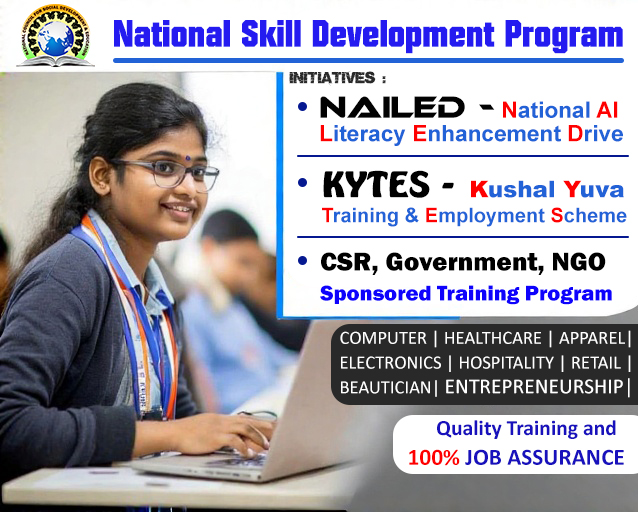
The National Skill Development Program (NSDP) provides sponsored training across a broad spectrum of high-demand sectors, including computer technology, healthcare, retail, Banking, Financial Services and Insurance (BFSI), and several others. The program empowers the learners to acquire knowledge, skill and employment opportunity irrespective of their diverse geographical and socio-economic backgrounds.
The National Skill Development Program (NSDP) provides sponsored training across a broad spectrum of high-demand sectors, including computer technology, healthcare, retail, Banking, Financial Services and Insurance (BFSI), and several others. The program empowers the learners to acquire knowledge, skill and employment opportunity irrespective of their diverse geographical and socio-economic backgrounds.
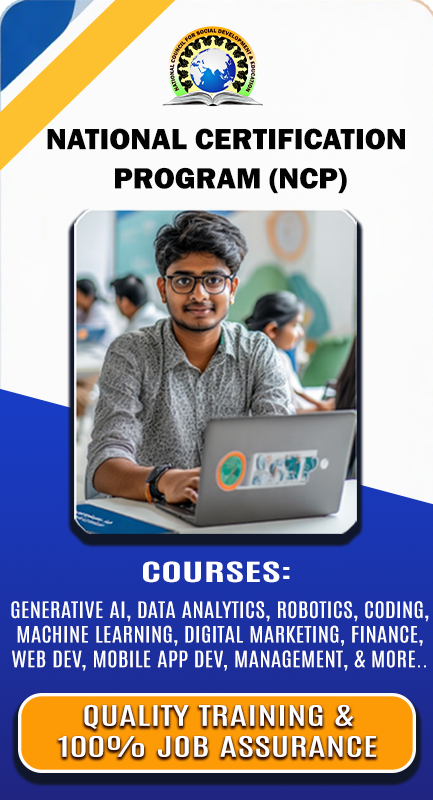
The National Skill Development Program (NSDP) provides sponsored training across a broad spectrum of high-demand sectors, including computer technology, healthcare, retail, Banking, Financial Services and Insurance (BFSI), and several others. The program empowers the learners to acquire knowledge, skill and employment opportunity irrespective of their diverse geographical and socio-economic backgrounds.
The National Skill Development Program (NSDP) provides sponsored training across a broad spectrum of high-demand sectors, including computer technology, healthcare, retail, Banking, Financial Services and Insurance (BFSI), and several others. The program empowers the learners to acquire knowledge, skill and employment opportunity irrespective of their diverse geographical and socio-economic backgrounds.


NCSDE ensures that every child, regardless of their gender, disability, or socio-economic status, has equal access to quality education. Through targeted programs for girls, differently-abled students, and children from marginalized communities, NCSDE works to eliminate barriers and promote inclusive education for all.
NCSDE’s educational programs place a strong emphasis on **gender equality**. By addressing issues like gender-based violence, early marriage, and societal discrimination, the organization ensures that girls and young women are given equal opportunities to receive an education, access leadership roles, and become change-makers in their communities.
NCSDE’s educational programs focus not only on academics but also on the **overall development** of students. We integrate life skills, health education, vocational training, and socio-emotional learning into the curriculum to ensure students are prepared for the challenges of life beyond school, including entering the workforce or pursuing higher education.
NCSDE embraces the **power of technology** to expand access to quality education. By providing digital classrooms, computer literacy programs, and e-learning resources, we bridge the educational divide, especially for students in remote and underserved areas, helping them access educational content and learn new skills that will be essential in the modern world.
NCSDE integrates **vocational education** and skill development programs into schools, focusing on real-world skills such as carpentry, sewing, coding, and agriculture. This enables students, especially from rural and economically disadvantaged backgrounds, to gain employable skills that improve their future job prospects and economic independence.
NCSDE actively engages **parents** and **community members** in the educational process. By organizing awareness campaigns, workshops, and parent-teacher meetings, we ensure that families and communities are invested in the education of children. This collective effort helps increase school attendance and reduces dropout rates.
Recognizing that **quality education** begins with **qualified teachers**, NCSDE invests in continuous professional development for educators. We offer training in modern pedagogical techniques, inclusive education strategies, and classroom management, ensuring teachers are well-equipped to handle diverse student needs and foster a positive learning environment.
NCSDE uses a **data-driven approach** to continuously monitor and evaluate the progress of its educational programs. Regular assessments, feedback from students and teachers, and performance tracking help us ensure the effectiveness of the initiatives. This allows us to make necessary adjustments and maintain high standards of education delivery.
Empowering women and girls by providing access to education, skill development, and opportunities for economic independence. Special focus is placed on addressing issues such as gender inequality and discrimination.
Ensuring that children, especially from marginalized communities, have access to quality education and are protected from exploitation, child labor, and abuse.
Focusing on rural areas where access to education and resources is limited. NCSDE provides targeted education programs that enhance livelihoods and improve infrastructure in these communities.
Promoting inclusive education by offering specialized programs and support for differently-abled individuals, ensuring they receive equal opportunities in learning and skill development.
Addressing the educational needs of senior citizens by offering programs that promote active participation in society, digital literacy, and opportunities for lifelong learning.
Focusing on preserving the cultural heritage of tribal and indigenous communities while providing access to education and skill development to improve their socio-economic status.
Supporting low-income families, migrant workers, and vulnerable individuals by providing access to education, skill-building opportunities, and financial inclusion programs.
Providing education and skill development programs tailored to the needs of migrant workers, helping them acquire the skills necessary for stable employment and integration into society.
Targeting underserved urban populations, particularly those living in slums, by providing access to education, vocational training, and community development programs to break the cycle of poverty.
Engaging local communities to actively participate in educational initiatives through awareness campaigns, meetings, and workshops, ensuring that the programs are aligned with their specific needs.
Conducting surveys, focus group discussions, and community consultations to understand the educational gaps and challenges in the target communities, ensuring that the interventions are relevant and effective.
Offering training programs to build the educational and vocational skills of individuals, especially youth, women, and marginalized groups, to enhance their employability and overall self-sufficiency.
Combining education with other key services such as healthcare, sanitation, and livelihood support to provide a holistic development experience for communities, ensuring long-term sustainability.
Partnering with local organizations, schools, and government bodies to increase the reach, effectiveness, and sustainability of educational programs, ensuring community ownership and participation.
Continuously assessing the impact and progress of educational programs through regular monitoring and evaluation mechanisms, enabling adjustments and improvements based on feedback and data.
NCSDE's outreach programs have significantly increased the enrollment of children from marginalized communities, particularly girls, tribal groups, and children with disabilities, into mainstream schools. By working closely with families and communities, we have ensured that education is no longer seen as a privilege, but as a right for every child.
NCSDE’s targeted interventions, such as mentorship programs, school-based support systems, and family engagement, have helped reduce dropout rates in schools, especially among girls and economically disadvantaged students. These efforts have ensured that children continue their education through to completion, improving retention rates.
Through targeted educational support programs, including after-school tutoring, remedial classes, and capacity-building for teachers, NCSDE has enhanced the quality of education. As a result, students from underserved backgrounds now achieve better learning outcomes, reflected in higher exam scores, improved literacy rates, and greater confidence in their academic abilities.
NCSDE has played a pivotal role in empowering girls by providing them with opportunities for education and skill development. By tackling cultural barriers, improving access to schools, and addressing gender-based discrimination, NCSDE has helped young girls gain the tools to pursue their dreams and become future leaders in their communities.
In today’s digital age, NCSDE has focused on bridging the digital divide by providing technology-based learning solutions. Through computer literacy programs, online learning resources, and digital classrooms, NCSDE has empowered students to access a world of knowledge and opportunities that were previously beyond their reach.
NCSDE's educational initiatives have significantly improved access to quality education for children in remote and underserved areas. By establishing learning centers, providing scholarships, and advocating for policy changes, thousands of students, particularly girls, have been able to access education that was previously out of reach.
NCSDE's education programs have positively impacted the socio-economic status of marginalized communities. By providing skill development, vocational training, and education, students have secured better job opportunities, leading to increased household incomes and enhanced community welfare.
NCSDE integrates health and hygiene education into its school programs, teaching students about the importance of sanitation, nutrition, and disease prevention. This has resulted in improved overall health and well-being among children, reduced absenteeism due to illness, and healthier school environments that contribute to better learning outcomes.
NCSDE’s approach emphasizes the involvement of parents and community leaders in the educational process. Through workshops, awareness campaigns, and community forums, parents are empowered to support their children’s education, leading to improved school attendance, better academic performance, and stronger community support for educational initiatives.
NCSDE’s Educational Programs are driving significant changes in the lives of individuals and communities across India. By addressing barriers to education and focusing on inclusive, quality learning, NCSDE is shaping a brighter future for those who need it most. The organization remains committed to ensuring that every child, regardless of background, has the opportunity to learn and grow, thus contributing to India’s vision of a more equitable and prosperous society.