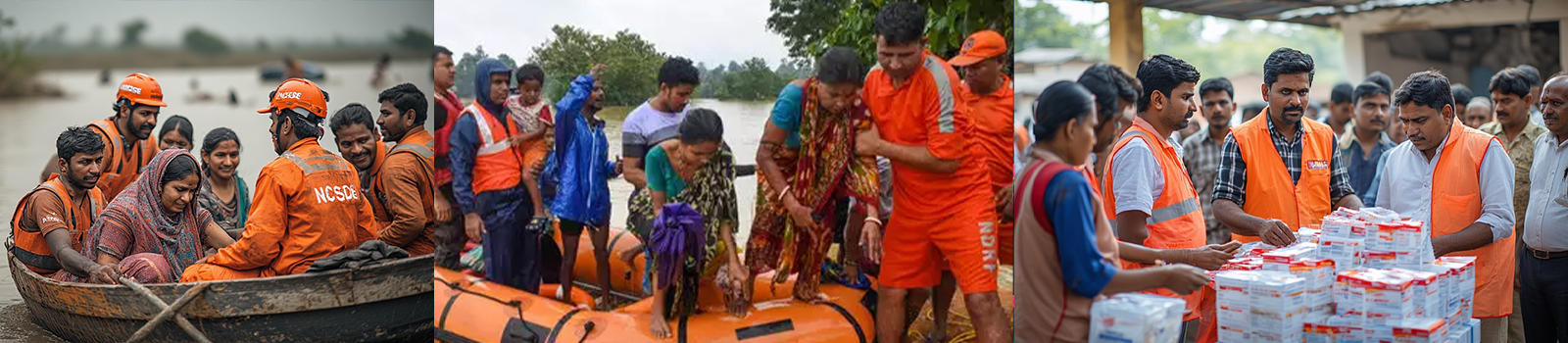
The Bharat Relief and Disaster Management Program is a nationwide initiative to strengthen India’s preparedness, response, and recovery mechanisms in times of natural and man-made disasters. It includes the deployment of emergency response units, training of local communities, development of disaster-resilient infrastructure, and providing urgent aid such as food, medicine, and shelter. The program also ensures mental health support and the use of technology like drones and early warning systems for rapid action.
Set up response teams and stockpiled supply hubs for rapid mobilization during crises.
Train locals in basic emergency response, CPR, and evacuation protocols to build grassroots resilience.
Provide trauma counseling, mobile clinics, and access to emergency medicine during and after disasters.
Ensure synergy among state, central, and non-governmental agencies for timely and unified disaster response.
Deploy drones, GIS mapping, and AI-driven systems for damage assessment, rescue, and early warning.
To create a robust disaster response ecosystem that ensures timely rescue, relief, and rehabilitation during natural or man-made emergencies, while building long-term community resilience through preparedness and risk mitigation.
Conduct region-wise hazard vulnerability assessments and develop contingency plans in collaboration with local authorities and NGOs.
Establish community-based disaster response units equipped with early warning systems, rescue equipment, and emergency supplies.
Train youth, NCC, NSS, and local community members as disaster response volunteers for first aid, logistics, and evacuation.
Deploy mobile units carrying food, water, medical kits, and shelter equipment to affected areas within 24–48 hours of a crisis.
Set up emergency health camps, trauma care, and psychological counseling units for disaster survivors, especially women and children.
Collaborate with urban and rural planners to construct disaster-resilient infrastructure, shelters, and evacuation routes.
Establish a centralized dashboard for tracking disaster occurrences, relief dispatch, and post-disaster rehabilitation status.
The **Bharat Relief and Disaster Management Program** plays a vital role in providing timely and effective assistance to disaster-affected communities across India. By focusing on preparedness, rapid relief response, medical aid, and long-term recovery, the program strives to save lives, restore livelihoods, and build resilience against future disasters. The collective effort of the government, NGOs, and volunteers ensures that help reaches those in need, mitigating the devastating impacts of disasters and contributing to a safer, more secure India.